By someone who kept showing up, and somehow became part of the scenery.

During those foggy interludes when life had decided to dropkick me in the face, I found myself back in California—specifically, Salinas. I’d gone there not for the scenery, which is mostly lettuce and a worrying amount of dust, but because it was quiet and forgiving, and at the time, I needed both.
I’d drive downtown, park my pickup truck in one of those oddly deserted parking garages that always make you wonder if you’re the only one who missed the memo, and walk the streets. Downtown Salinas is a small place—the sort of town where you can cross it twice before your coffee cools. It’s smack in the middle of the state’s agricultural heartland, ringed by strawberry fields that stretch out like a pastoral hallucination, and vegetable patches in such abundance that someone, presumably with a marketing degree and a talent for euphemism, dubbed it “The Salad Bowl of America.”

Now, this might sound charming—and it is—but Salinas is also a place where prosperity walks with a limp. Businesses flicker in and out of existence like lights on a faulty circuit, and the homelessness is hard to miss. That said, it has its treasures. Just outside town, Marina Beach unspools itself along the coast in a quiet, unbothered sort of way. For California, it’s practically monastic.
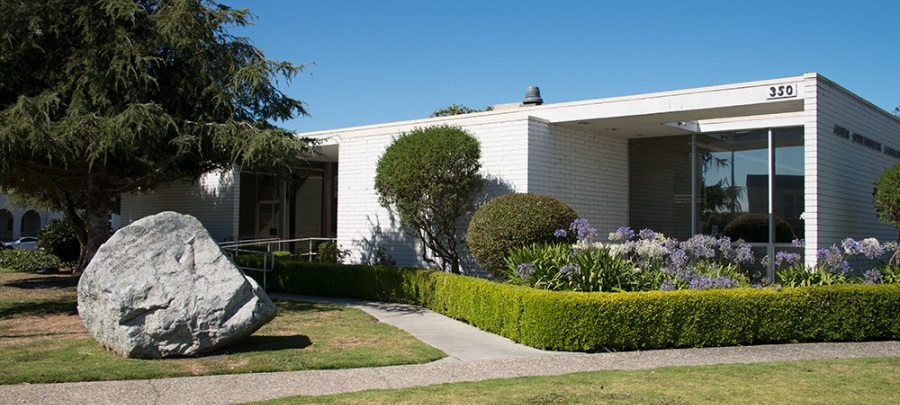
My favorite walk led me to the John Steinbeck House, which still stands—defiantly, one suspects—on Central Avenue. Once his childhood home, it’s now a museum with a small restaurant and gift shop bolted on, because America. I’d sit out front on a bench for hours, watching the occasional tourist wander in, imagining young Steinbeck on those same streets, scribbling furious notes and dodging the scent of boiled cabbage from his mother’s kitchen.

When I wasn’t indulging in literary time travel, I spent afternoons at the public library. It was everything you’d want from a library, it’s got fluorescent lights, the comforting hush of paper turning, and the unspoken understanding that everyone here had their own small reason for being there.
There was a mechanic who came regularly. He looked like someone who could strip an engine bear with his teeth, but he told stories like a man who had a journalism degree and a grudge against CNN. He would regale us with tales about his clients and local gossip, then disappear mysteriously, always saying, “Gotta head to the next job.” What that job was, I never asked. Possibly international espionage. Possibly just brake pads.
One day, I overheard a boy struggling with algebra—loudly, and with mounting despair. The librarian, who had the kind expression of someone who’s seen it all but still believes in Dewey Decimal, tried her best but soon looked like she was being waterboarded with quadratic equations. I stepped in.
It started with one kid. Then two. Then a horde. Before long, I was tutoring nearly a dozen children in what became, quite unintentionally, an underground math club. They told me my methods were better than their teacher’s, which is flattering until you realize the bar may be distressingly low. One of their teachers eventually came to find me, likely expecting to uncover a cult or at least a pyramid scheme. She asked about my qualifications. I told her I wasn’t a teacher like her, just apparently an engineer with a lot of spare time in his hands. She nodded slowly, like that explained everything and nothing all at once.
Not far from the library is a community sports center that had these surprisingly exciting volleyball and basketball tournaments. I’d go, sit on the bleachers, and let the echo of bouncing balls and squeaky shoes clear out the attic of my mind. It was therapeutic in the way only poorly refereed youth sports can be.
One day, the American Red Cross had a blood drive there. Feeling vaguely altruistic—and admittedly a bit bored—I signed up. I filled out the usual paperwork, including the question, “Have you lived outside the U.S. for more than a year?” I ticked the box and wrote “UK” beside it. They called me over, laid me down, and started siphoning off what I hoped would be a noble pint of O-negative.
Then a nurse came rushing over, gesturing like someone flagging down a plane.
“Stop!” she said, dramatically. “He’s a no go!”
Naturally, I assumed the worst. Had something turned up in my blood? Had they discovered I was dangerously charming? But no, it turned out that living in England—yes, dear old rain-soaked, tea-sipping, Bake Off-watching England—was a problem.
“Mad Cow,” the nurse said solemnly.
I blinked. “You think I caught Mad Cow in 1998 and only now it’s kicking in?”
“Well,” she said, as if trying to reassure me, “we think it doesn’t transfer to humans.”
You think?
Later that week, disappointed and still mildly bewildered by my bovine disqualification, I was enjoying a quiet latte in a coffee shop and reading the paper, when a familiar face from the library happens to come by. We talked a bit. Then, casually, he asked, “So which shelter do you stay at?”
I stared at him. “Shelter?”
“Yeah, aren’t you homeless? Like me?”
I explained I lived with my aunt and that she hadn’t yet chucked me onto the curb. He nodded thoughtfully and offered to “hook me up” if that ever changed. I thanked him, bought him a coffee, and we parted ways like old friends—or possibly future shelter roommates.
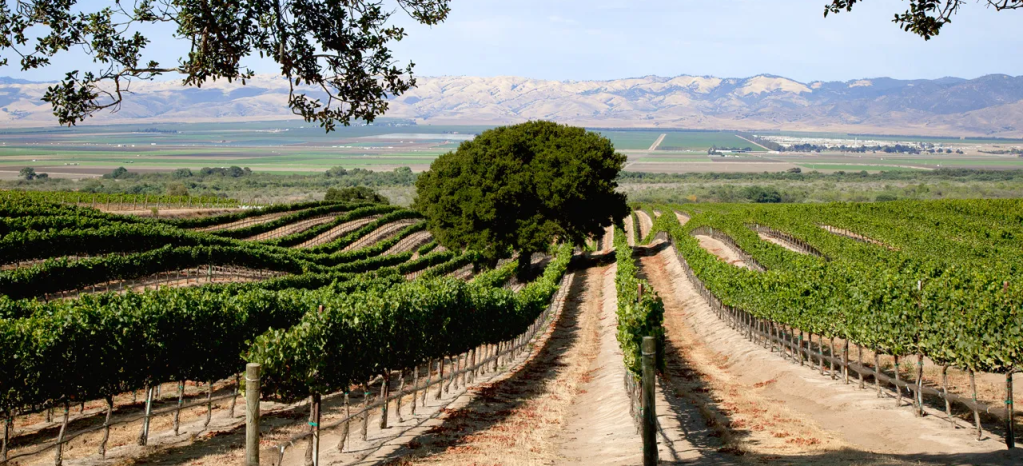
In the end, Salinas was good to me. It gave me peace, strawberries, a vineyard, algebra students, and the unforgettable experience of being medically rejected for the crime of once eating a Cornish pasty. And of course, my aunt would never throw me out, but I eventually found my way to a small house in Richmond, Virginia. These days, I garden, walk my lil dog, drink coffee without incident, and—so far—remain blissfully free of any neurological afflictions caused by cattle.
And yes, if you’re wondering, I’m still slightly annoyed I wasn’t allowed to donate blood.
Thanks for dropping by my little corner of the world. If the story gave you a chuckle or made you pause and think, a like would be mighty kind. And if you’re feeling adventurous, well, hitting that subscribe button is like pulling up a chair and staying a while—always room for one more.
I subscribe back, by the way. It’s my way of saying, “Welcome to the club—snacks are in the back, good times up front!”
Your comments make me smile, sometimes laugh out loud, and every now and then, they nudge me to dig a little deeper, write a little better. So, stick around—who knows what we’ll stumble upon next!
If you’re feeling a little generous—like the world’s got just enough warmth left in it for a small kindness—wander on over to my Donate page. No pressure, just a gentle nudge from the universe, saying, “Hey… this might be worth it.”


 A Kings
Leave a reply to minimouse8 Cancel reply