by someone who wore boat shoes to a railway interview
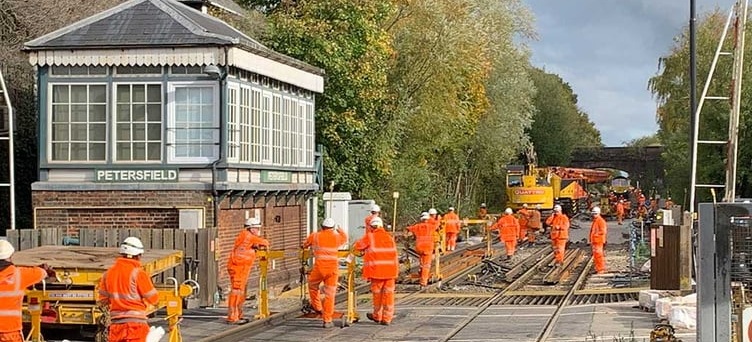
Back in the early 2000s—when Nokia was king and broadband meant waiting three hours to download one photo of a car—I returned to England after a stint abroad. I had a young family, a head full of vague responsibilities, and a sudden awareness that baby formula, nappies, and electricity don’t come cheap. So, off I went in search of a job, tail wagging like an overexcited Labrador at a butcher’s window.
I fired off résumés like a malfunctioning fax machine—every company that had a name, every newspaper listing that mentioned the word “engineer,” or even just the word “job.” I was ready to be a barista, barrister, or barracks cleaner—didn’t care. The main goal was simple: keep the family fed and not die commuting three hours a day into Mordor, otherwise known as London.
Eventually, I landed a job with some firm in London that did… things. Switchgears, apparently. Now, I understood what switchgears did, in theory. I just didn’t know how to do anything with them. My days were spent smiling, nodding, furrowing my brow meaningfully, and dying slowly inside. London didn’t help either. If you’ve ever tried walking through central London during tourist season, you’ll know it feels like wading through a crowd of dazed penguins—stopping, turning, blocking the path every five steps to take a blurry photo of a lamppost. “Yes Brenda, it’s just a big clock they named Ben. Now run along”

So, like any self-respecting quitter, I bolted. Back to Hampshire I went, licking my wounds and eyeing the job market like a hungover lion trying to decide if chasing the antelope is really worth it.
My options weren’t exactly glamorous. My old job at a box factory wanted me back. As a “box quality controller.” Seriously. How does one judge the quality of a box? “Ah yes, this one’s particularly square. Give it an award.” I passed.
Next up was an appliance repair centre—fridges, ovens, washing machines… basically a graveyard of middle-aged white goods. Nope. I wanted rockets, not refrigerators. So I applied for the big dogs: British Aerospace, Lockheed Martin, even the police. Yes, I flirted briefly with becoming a man of the law. That, however, is a tale for another time.
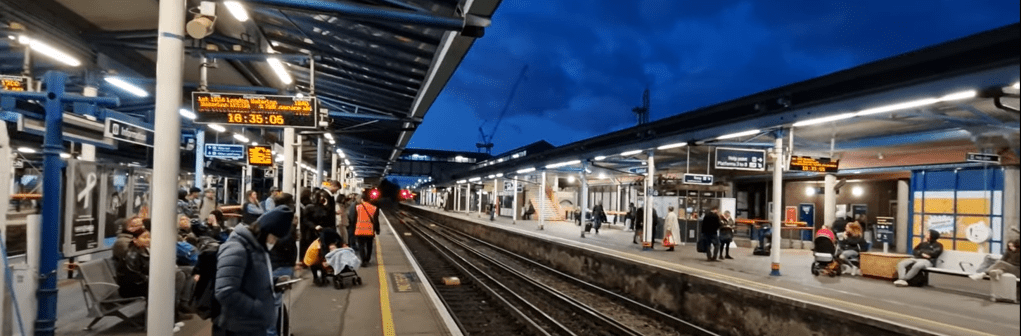
And then, while waiting at the Guildford train station with the family, I saw it. A poster, practically glowing: “The Railway Needs You!” It promised everything: meaningful work, national pride, perhaps even a uniform that didn’t involve ironing. I thought, “Why not? It can’t be worse than boxes.”
I applied.
A week later, Lockheed Martin called. The mythical unicorn. An interview! It was intense. You don’t get a job there—you fight your way through a gladiator pit of multiple interviews until there’s only one left standing. While that circus was going on, the railway called too.
And this is where things get… well, very me.
I rocked up to the railway interview in shorts, a polo shirt, and Topsiders. Everyone else looked like they were attending a funeral for the Queen’s second corgi. My American instincts had failed me—this was England, where wearing anything less than a tie to an interview is punishable by disapproving looks and scones thrown at your head.
First question: “What’s your experience with trains?”
I said, confidently, “I ride them a lot.”
The interviewer blinked. “Fair enough.”
Shockingly, I didn’t get thrown out. The more technical stuff kicked in, and thanks to my background and education, I held my own. Apparently, knowing which end of a voltmeter to hold makes you employable.
Meanwhile, Lockheed called again for Round Two. It was even more exhausting than the first. Somewhere between discussing ballistic trajectories and watching middle-aged men argue about space warfare, I realized I was developing a nervous twitch.
Then the railway called. They wanted me. They actually wanted me.
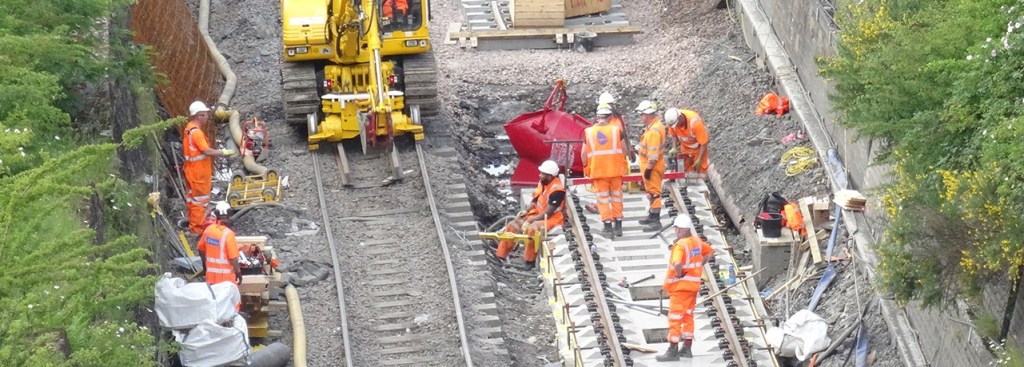
Day one: Havant depot. It looked like a casting call for The Full Monty: Railway Edition. A room full of big guys talking about lifting rails, digging ballast, and other things that sounded like ways to herniate your spine before lunch. I seriously considered running.
And then came Gary.
Except my name’s not Gary.
A tall, no-nonsense gentleman came stomping in, looked straight at me and said, “You Gary?” I said, “No, it’s Ariel.” He squinted and went, “Yeah, that’s what I said, Gary.”
Then he glanced around the room full of guys chatting about ballast and rail clamps, shook his head, and said, “You’d better come with me. You’re too smart for this lot.”
I found out later he used to be an engineer for BAE Systems and had actually designed missile batteries. So when a guy like that tells you to follow him—you do.

He took me to the other side of the depot. The glamorous world of Signals and Telecoms Engineering. S&T. According to the other departments, it stands for “Sick and Tired.” But to me, it felt like destiny. Wires, circuits, systems—it clicked. The people were brilliant. Warm, mad, loyal, and full of stories. It felt like home.
Lockheed may have written back. Who knows? I never checked.
Because, as it turns out, the railway didn’t just need me. I needed it too.
Thanks for dropping by my little corner of the world. If the story gave you a chuckle or made you pause and think, a like would be mighty kind. And if you’re feeling adventurous, well, hitting that subscribe button is like pulling up a chair and staying a while—always room for one more.
I subscribe back, by the way. It’s my way of saying, “Welcome to the club—snacks are in the back, good times up front!”
Your comments make me smile, sometimes laugh out loud, and every now and then, they nudge me to dig a little deeper, write a little better. So, stick around—who knows what we’ll stumble upon next!


 A Kings
Leave a reply to lisaapaul Cancel reply