By Someone Who Probably Should’ve Been Supervised.
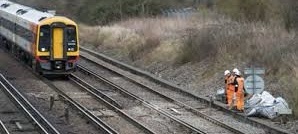
Working for the railway in England has its perks. There’s the cardio—miles of it. The countryside views that look like a Windows screensaver. And, of course, the occasional flirtation with death that really spices up the midweek shift.
Back in the spring of 2004, two buddies and I were doing just that—ambling along the tracks near a little village called Liss, on our way to Liphook in Hampshire. And no, not New Hampshire, where everything smells of syrup and moose. I mean the original Hampshire. With hedgerows, history, and the odd horse pretending to be a train hazard.
The scenery was… well, it was stunning. Rolling hills that looked like they’d been ironed. Fields of rapeseed in full yellow fury, like a cheddar factory melted during a thunderstorm and oozed across the hills. And then there was the lavender—turning the place into a scene from a soap commercial. Nature, showing off again.
Wildflowers burst out alongside the tracks in colors so loud that they looked like someone had a toddler let loose with a brush and tubs of colorful paints. It was all very peaceful. Very poetic. Very Monet with murder potential—because we were walking next to live rails.
Springtime in England is beautiful, yes— but it also turns the entire countryside into one big, muddy death trap. The wooden railway ties (sleepers)? Slicker than a used car salesman in a shiny cheap suit. And unlike in the U.S., where trains run on overhead lines or diesel-electric systems, the South-East of England thought, no, that’s too boring. Let’s make things lethal. So they slapped a 750-volt DC third rail right there on the ground, next to the normal track. For fun.
Anyway, our fearless leader was off fiddling with some trackside box on the far side of the line. My colleague and I were trudging toward the signal bungalow, pretending to know what we were doing, when suddenly—like a fox getting tased—we heard it.
“Heeeeelp!”
We turned to see our friend in a Saturday night fever position no man ever wants to find himself in: spread-eagled across the rails, arms flailing, knees bent, one foot on a wooden tie (sleeper) and the other somewhere dangerously close to the electric rail. Right between his legs.
His face was a work of art. Equal parts horror, concentration, and the dawning realization that his bloodline was moments away from becoming extinct.
“My bloody family jewels are about to get fried!” he shouted, still frozen in place like some kind of railway-themed scarecrow.
As quick as we can, we got to him and pulled him out of his precarious situation and once the danger has passed, and being the compassionate professionals we were, we did the only sensible thing.
We laughed. A lot.
Eventually, once the tears of laughter had cleared enough for us to see straight, he collapsed like a Victorian woman at a fainting contest, gasping and pale enough to pass for bone China.
“Still intact?” we asked, because frankly, it was the only question that mattered.
He nodded. Weakly.
“Good,” we said. “Because this story? It’s going to outlive you.”
And it has.
Because while working on the railway might not make you rich, it absolutely gives you stories you can dine out on for the rest of your life—preferably somewhere without exposed electric rail.
Thanks for dropping by my little corner of the world. If the story gave you a chuckle or made you pause and think, a like would be mighty kind. And if you’re feeling adventurous, well, hitting that subscribe button is like pulling up a chair and staying a while—always room for one more.
I subscribe back, by the way. It’s my way of saying, “Welcome to the club—snacks are in the back, good times up front!”
Your comments make me smile, sometimes laugh out loud, and every now and then, they nudge me to dig a little deeper, write a little better. So, stick around—who knows what we’ll stumble upon next!


Leave a Reply