
Indiana. The Crossroads of America. A place where colossal semi-trucks roar in from the north, south, east, west, and every conceivable direction in between, like a great migration of diesel-belching wildebeests on their way to deliver vital supplies. If you’ve ever been on an American cross country trip, chances are you’ve passed through Indiana, possibly while being overtaken by an 18-wheeler doing Mach 2, because speed limits here, are just a mild suggestion at best.
Truckers, in their infinite wisdom, call Indianapolis “Naptown.” Not because it’s particularly boring (although opinions vary) but because the truck stops here are vast—small cities unto themselves—selling everything from beef jerky the texture of shoe leather, trucker hats that say things like “Git-R-Done”, to an astonishing array of police radar detectors and other slightly dubious electronic devices. If you’ve ever thought, “I need a CB radio, a cowboy hat, and a shower all in one convenient location,” Indiana’s truck stops have got you covered.
I called Indiana home for a year. More specifically, Indianapolis, where the skyline is dominated by sports arenas and the collective will of Hoosiers to pretend winter isn’t happening. The state is famous for its corn and soybeans, which—combined—rake in nearly $4 billion annually. To put that into perspective, there are actual sovereign nations with smaller economies. But Indiana isn’t just about crops; this is sports country. The Pacers, the Colts, the Hoosiers, Notre Dame, and of course, the Indianapolis 500—the race that turns the city into a madhouse every May.
Lost in the Middle of Nowhere
One day, in a rare moment of wanting to explore, I set off to find covered bridges and old towns, because that’s the kind of thing people do when they had their fill of YouTube videos. This was before smartphones turned navigation into a non-issue. Back then, your only options were those clunky Garmin or TomTom GPS devices, which I, naturally, did not have.
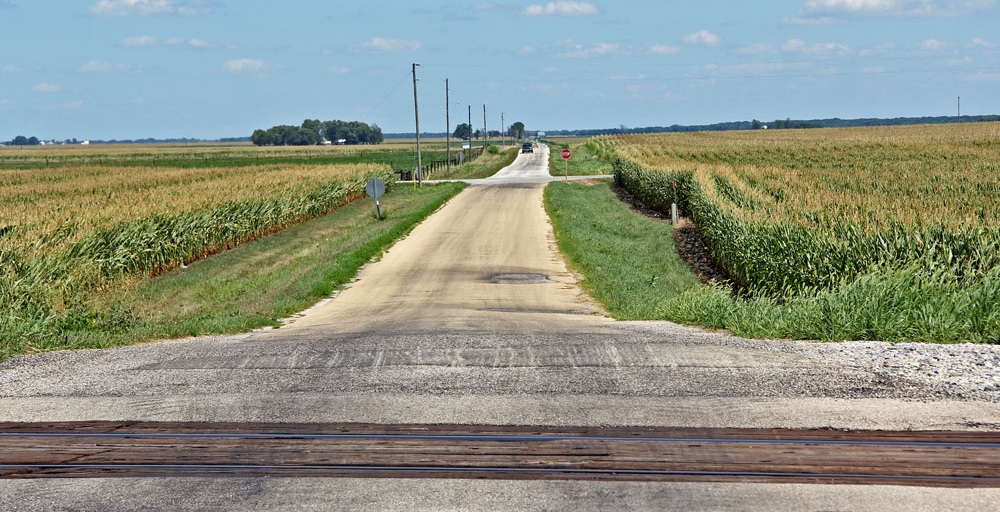
I found myself staring at an old farmhouse, complete with a barn and wooden fences, realizing I was well and truly lost. No street signs, no landmarks, just a whole lot of corn fields and the faint suspicion I was about to be cast in a low-budget horror film.
After driving in increasingly desperate circles, I flagged down a man in a battered pickup truck. As expected from a Midwesterner, he pulled over, smiled, and asked what the problem was. I told him I was trying to find the main road back to Indianapolis.
What followed was a set of directions so complex they could have been written by a mad cartographer.
“Just go straight north for about… four to five minutes. You’ll hit a crossroads. Head east till you get to a stop sign, then take the southern route past the milling factory. North of that, you’ll find the road. Then head west back to Indianapolis.”
At this point, I was close to tears. What happened to simple instructions like “Turn left” or “Go that way”? My internal compass is about as useful as a Rubik’s cube at this point, so “north” was not a helpful word.
Luckily, I spotted a U.S. Postal Service van and flagged it down. The postman—clearly amused—agreed to help but had a few deliveries to make first. So, for the next two hours, I played assistant postman, shuttling boxes back and forth before finally following him to the main road.
Snow, Blowers, and Midwestern Niceties
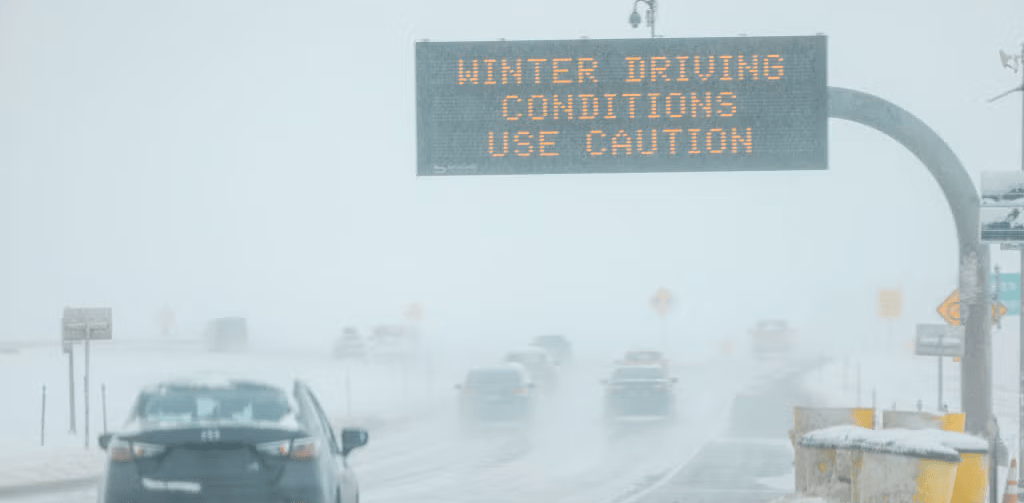
On my drive home, there were huge electronic highway signs that offered their usual brand of vague and unhelpful advice: “Severe Snow Incoming.” Okay. And? Am I supposed to stop driving? Drive faster? Call my loved ones and say goodbye? Thankfully, I made it back before the snow turned Indiana into the North Pole.
The next morning, my sister—being fully assimilated into Midwestern culture—asked if I could clear the snow off the driveway and sidewalk. I agreed. She suggested I use the snow blower.
Now, in California and England, we don’t do snow blowers. So, I searched the garage for this mythical contraption for half an hour looking for what I assumed would be some kind of large, industrial-looking machine with a big red button that said “BLOW SNOW!.”.
Eventually, she came to check on me, likely wondering about the lack of activity and progress. That’s when I let her know that the machine was nowhere to be found.
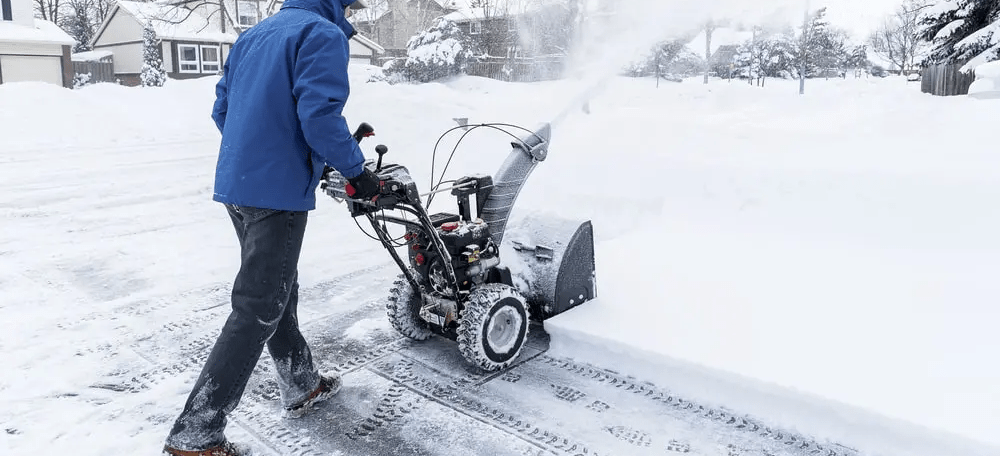
“It’s right there,” she said, pointing at what was clearly a lawnmower.
“That’s a mower,” I informed her.
“No,” she said. “That’s the snow blower.
“That is the mower.” She pointed out.
I was unconvinced. “That,” I pointed again, “is a little tractor.”
She rolled her eyes. “Just start it.”
“Where’s the switch to make it blow?”
At this point, she nearly collapsed with laughter and told me I had to yank a pull cord, like starting an old generator. Oh, of course. Because nothing says “advanced technology” like yanking a string like it’s 1923. After several near-death experiences involving an engine that definitely wanted to kill me, I finally got the thing running and spent two hours happily throwing snow into the abyss, my fingers slowly succumbing to frostbite.
When I finally finished, I trudged inside, victorious. My sister took one look and said, “Did you do the neighbors’ too?”
Apparently, it’s a Midwestern thing. So, back out I went, learning my first lesson in neighborly snow removal.
Monrovia: The America You Think Only Exists in Movies
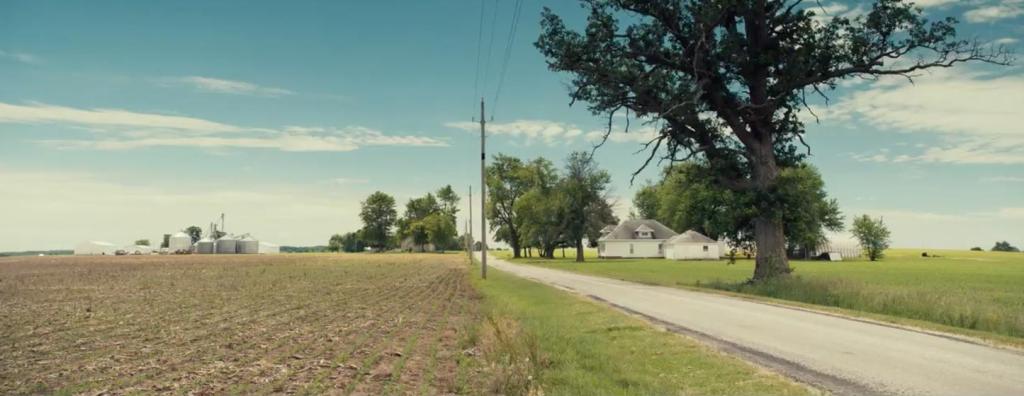
It wasn’t all frostbite and being lost in cornfields. In the early summer, a friend took me to her old town, Monrovia, for a weekend. This place was straight out of a Ray Bradbury depiction of a small town in rural America. People still kept chickens. They had vegetable gardens. The houses were magnificent, early 20th-century builds, some with kitchens that were separate from the main house. And yes, there was a genuine outhouse—now modernized, thankfully, because some traditions really don’t need to be preserved.

That night, we took her dad’s pickup to a drive-in theater, reversing it so the truck bed faced the screen. Wrapped in a cozy blanket, eating a gloriously greasy corn dog and cheese fries, I had what can only be described as a profoundly American experience. The next morning, we gathered eggs from the chickens and cooked them for breakfast—farm-to-table at its finest.
Kokomo: Where I Was Introduced to Union Rules the Hard Way
I also worked in Indiana, in a place called Kokomo. Not the beach town from the Beach Boys song, but an industrial hub home to Chrysler’s engine block and transmission factories.
There, I helped program conveyor systems and a couple of robotic arms, which I affectionately named Britney and Lindsay—because they were a diva, chaotic, and prone to unexpected breakdowns.

One day, I was adjusting the water pressure on a massive engine block and transmission washing machine—essentially a giant dishwasher with a robotic arm—when I noticed a leaking pipe. Being an engineer and a person with common sense, I grabbed a wrench and started tightening it.
Big mistake.
Within seconds, a burly man in a T-shirt two sizes too small stormed over, yelling, “This is a union shop! If it’s plumbing, you need a plumber!”
I smiled and said, “It’s fine, just a quick turn and—”
Next thing I knew, I was outside, thrown out by a team of slightly greasy, highly organized men. It took two days and a lot of apologies before I was allowed back in.
The People: The Real Treasure of Indiana
For all its quirks—its impossible driving directions, relentless winters, and strict union rules—Indiana’s greatest treasure isn’t its crops, its race cars, or its industrial might, not even its sports teams (though locals might disagree with this). It’s the people.
The folks here are warm and kind, always ready to say hello with a smile or lend a helping hand. They’ll pull over if you’re stranded, they’ll shovel your driveway just because, and if you ever find yourself lost in a sea of cornfields, they’ll gladly give you directions—though you may need a compass, a map, and a degree in orienteering to decipher them.
And, if you ever wondered where Abe Lincoln got the grit to lead a divided nation through its darkest hour—Indiana probably had something to do with it.
Goodbye, Indiana—Hello, Virginia
Eventually, my time in Indiana came to an end not by choice but because I needed to move for my new job which was like my old job in England, and so, I moved on to West Virginia, then eventually my next home, beautiful Virginia. But that’s a story for another day.
Indiana, you were cold, confusing, and at times, slightly terrifying. But you were also warm, welcoming, and wonderfully different. And for that, I will always be grateful.
Thanks for dropping by my little corner of the world. If the story gave you a chuckle or made you pause and think, a like would be mighty kind. And if you’re feeling adventurous, well, hitting that subscribe button is like pulling up a chair and staying a while—always room for one more.
I subscribe back, by the way. It’s my way of saying, “Welcome to the club—snacks are in the back, goodtimes up front!”
Your comments make me smile, sometimes laugh out loud, and every now and then, they nudge me to dig a little deeper, write a little better. So, stick around—who knows what we’ll stumble upon next!


 A Kings
Leave a reply to Priti Cancel reply