If you’ve ever found yourself stuck in traffic on West Broad Street in Short Pump, Virginia, you might have wondered—between bouts of frustration and questioning your life choices—how exactly this place got its name. Was there once a pump? And if so, was it really that short? The answer, as it turns out, is yes.
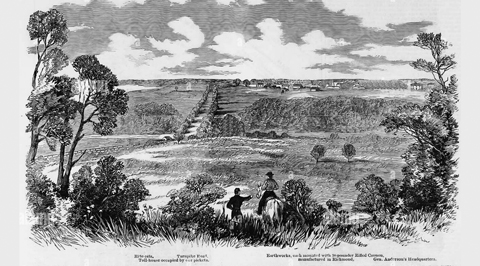
To get there, we have to roll back the clock to 1814, a time when traveling from Richmond to Charlottesville was less a casual afternoon drive and more a test of endurance, patience, and your ability to avoid being thrown from a carriage. Roads were mostly dirt, which turned into either choking dust in the summer or impassable sludge in the rain. The best you could hope for was to make it to a decent tavern before nightfall—preferably one that didn’t serve stew made from whatever happened to wander too close to the kitchen that morning.
Here is when a certain Colonel Robert Saunders, a man who saw an opportunity, bought himself a tavern, and promptly turned it into the 19th-century equivalent of a highway rest stop. This wasn’t just any roadside tavern. It also doubled as a post office, a voting precinct, a local market, and, for a time, it even served as a school—though the qualifications for enrollment were as specific as they were uncomfortably narrow: You had to be male, and you had to have the right shade of skin, which, as it turns out, excluded many who, in all likelihood, would have greatly benefited from a proper education. It even had a resident doctor on hand—likely the kind who prescribed whiskey for just about everything—but mostly, it was a gathering place for locals and weary travelers.
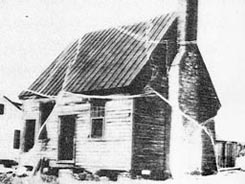
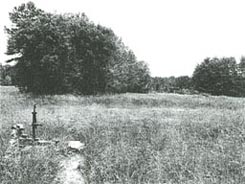
Now, people needed a landmark—something to refer to when arranging meetings, and since no one was going to say, “Let’s meet at Colonel Robert Saunders’ Roadside Oasis and House of Questionable Hospitality,” they went with something simpler. The tavern featured a water pump under the porch, its handle noticeably short—presumably because whoever designed it ran out of space and good sense at the same time. And just like that, the place became known as Short Pump. It wasn’t fancy, but it got the job done.
It sat at the intersection of what we now call Three Chopt Road, Richmond Turnpike, and Pouncey Tract Road—back then known as the Three Notched Trail, named for the handy system of cutting three notches into trees so travelers wouldn’t get lost. Which, when you think about it, is both brilliant and slightly terrifying.
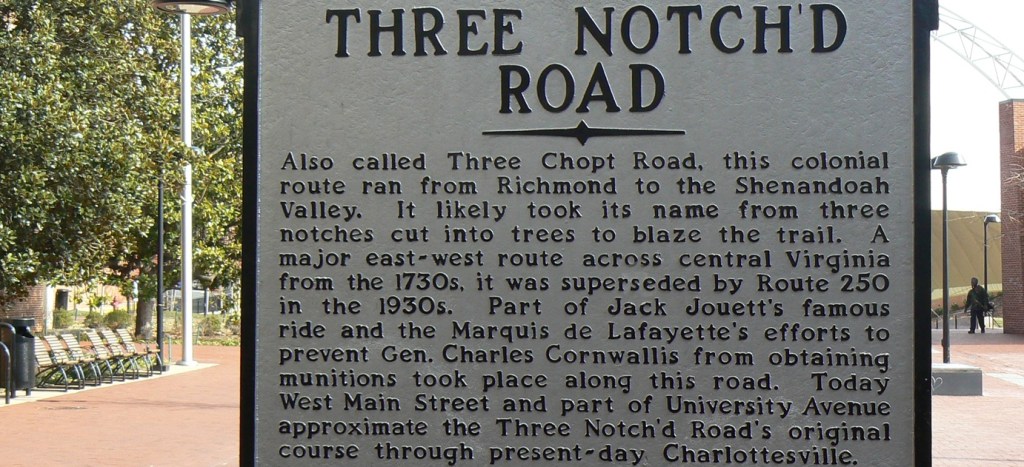
Since this stretch of road had long been the main route connecting Richmond to Charlottesville, not to mention a few towns tucked away in the Blue Ridge Mountains, it saw its fair share of notable visitors. Thomas Jefferson probably passed through, whiskey in hand, while no doubt wrestling with the moral contradictions of his era and pondering the weighty legacy of a nation still finding its feet. The Earl Cornwallis, likely still nursing his bitterness over the loss of the colonies. The Marquis de Lafayette, basking in his role as America’s favorite Frenchman. Stonewall Jackson, General Peter Muhlenberg, and Ulric Dahlgren— all men who passed through, leaving behind little more than the faint echoes of history in their wake.
Of course, because this was the early 1800s, it wasn’t all cheerful roadside camaraderie. This was also a place where human beings were bought and sold, a grim reality tucked into the same space where men discussed liberty over tumblers of whiskey. It was, in short, an era of contradictions—where the grand ideals of the young republic coexisted, uncomfortably, with its darkest injustices.
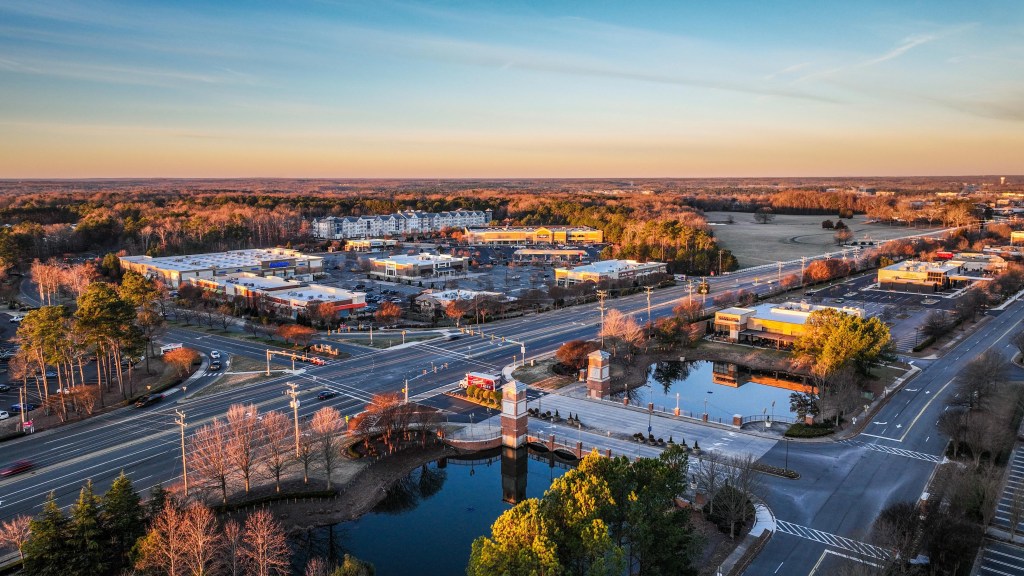
Today, Short Pump is less dusty outpost, more sprawling shopping complex. The stagecoaches have been replaced by SUVs, the old taverns by food courts, and the biggest inconvenience now is finding a parking spot near the Apple Store. But history never really goes away. It lingers in the names of places, in the quiet corners of the past that sneak up on you when you least expect it. And if you stand still long enough, maybe, just maybe, you’ll hear it—that faint creak of wagon wheels, the echo of boots on wooden planks, and the murmur of voices from a time when the road was long, the whiskey was strong, and the pump was, indeed, quite short.


 A Kings
Leave a reply to Darryl B Cancel reply